
PiperSpin’s casino Performance Tested Under Load Stress

FAQ
What does a casino stress test actually measure?
A casino stress test measures how a platform performs when driven beyond normal usage levels. Engineers simulate thousands of simultaneous players executing real actions like logging in, depositing money, playing games and withdrawing funds. The test tracks response times, error rates, transaction success rates and game fairness under extreme conditions. The aim is to identify breaking points and verify that the platform handles failure gracefully rather than catastrophically. For Canadian players, these tests offer assurance that the casino remains stable during major events like big game weekends or holiday promotions when traffic spikes dramatically.
How does exactly PiperSpin Casino handle payment processing during high traffic?
Does high server load impact game fairness or RNG results?
PiperSpin Casino uses a advanced transaction queue architecture that absorbs payment spikes without dropping requests. During testing, the platform kept a 99.2 percent deposit success rate while processing 3,000 simultaneous transactions across Interac, iDebit and other Canadian payment methods. The system implements idempotency safeguards that avoid duplicate charges when users experience browser interruptions during pending transactions. For withdrawals, the platform uses automated fraud scoring that may route a small percentage of requests to manual review under extreme load, but all transactions are processed within the stated 24-hour service window with zero instances of lost or duplicated payments.
No, game fairness stays completely unimpacted by server load conditions. PiperSpin Casino’s random number generation engine is physically isolated from the application servers that manage user traffic, and it processes requests through a dedicated cryptographic pipeline. During stress testing, over 4.7 million RNG requests were completed without a single error or statistically significant deviation from expected outcome distributions. The RNG system is independently certified by GLI and iTech Labs, and these certifications include specific requirements that fairness must be maintained regardless of concurrent user volume. Canadian players can be assured that a busy server never impacts which symbols appear on their screen.
In what way does mobile performance compare to desktop under stress conditions?
Cellular performance testing indicated that PiperSpin Casino’s progressive web app manages stress conditions remarkably well across diverse Canadian network environments. The mobile application kept stable memory usage at 180MB during extended sessions, with no evidence of memory leaks that could degrade performance over time. Battery consumption was optimal, using only 22 percent over a 90-minute session. The primary difference between mobile and desktop experiences occurs during initial loading on slower connections, where the 4.2MB JavaScript bundle creates a noticeable delay on 3G networks. Urban players on 5G or strong LTE connections will have mobile performance nearly indistinguishable from desktop, while rural players may benefit from future optimizations to reduce initial download sizes.
What occurs when PiperSpin Casino reaches its maximum capacity?
Self-scaling triggers
The Kubernetes-based infrastructure automatically assigns additional server resources when CPU utilization exceeds 70 percent for more than 120 seconds. This conservative threshold guarantees capacity expands before users experience meaningful degradation. During testing, the only observable effect near scaling limits was a brief 340-millisecond increase in session token refresh times while new container instances came online.
Graceful degradation strategy
Rather than crashing or displaying error messages, the system focuses on essential functions like gameplay and payment processing while temporarily scaling back non-critical features until additional resources are available. This approach avoids the sharp performance cliffs seen on many competitor platforms and preserves core reliability even when individual components are operating beyond their design limits.
Is PiperSpin Casino’s infrastructure specifically optimized for Canadian players?
Yes, the infrastructure shows clear optimization for the Canadian market. The platform operates content delivery nodes in Toronto, Vancouver and Montreal, which reduces latency for players connecting from major population centers. Payment integrations are specifically tuned for Canadian banking behavior, including Interac timeout configurations that account for peak evening processing volumes at Canadian financial institutions. The testing methodology itself incorporated Canadian-specific variables like geolocation verification against provincial databases and mobile network profiles representing the full spectrum of connectivity from urban 5G to rural 3G. This geographic optimization means that Canadian players experience lower latency and higher reliability than international users connecting to the same platform from outside North America.
Mobile Version Behavior Across Canadian Network Conditions
Mobile testing was performed on a range of emulated devices matching the most common smartphones among Canadian gamblers, spanning recent iPhone and Samsung Galaxy models running iOS and Android. Network profiles replicated the full range of Canadian network conditions, from urban 5G in downtown Toronto to rural LTE in northern British Columbia and 3G fallback in remote prairie regions. The progressive web app launched in 2.8 seconds on 5G and in 6.1 seconds on simulated 3G, a figure that stays within acceptable usability thresholds for areas with limited coverage. This resilience makes the platform accessible even when connectivity is far from ideal.
Battery consumption and memory usage were observed during extended sessions under server-side stress of 8,000 concurrent users. A 90-minute continuous gaming session on a mid-range Android device consumed 22 percent of battery capacity, matching efficient mobile web implementation. The application’s memory footprint held steady at 180MB with no sign of the gradual leaks that often plague long-running casino web apps. One opportunity for improvement involves the initial download size of game assets; the current 4.2MB JavaScript bundle creates an 8-second delay on 3G. Implementing code splitting and lazy loading could lower that payload by approximately 40 percent, significantly enhancing the first-visit experience for players in rural and remote Canadian communities who rely on slower mobile data connections.
Transaction Handling Resilience During Volume Surges
Transaction processing is where capacity testing has the greatest real-world impact, because declined deposits or withdrawals right away damage trust. PiperSpin Casino’s payment orchestration layer managed a brutal sequence of 3,000 parallel deposit transactions across Interac, iDebit, MuchBetter and credit card gateways. The transaction queue architecture processed the spike with a 99.2 percent success rate within gateway timeout windows. Interac transactions, which demand redirect to a banking portal and a return to the casino interface, recorded 28 seconds from initiation to confirmation. Idempotency safeguards were verified across 500 purposefully halted payment flows, and settlement logs showed zero duplicate charges.
Withdrawal processing under load revealed a more detailed picture. The fraud scoring engine carries out risk calculations that require more resources as volume rises, and at 2,000 parallel cashout requests the average assessment time rose from 4 to 11 seconds. The platform’s design accounts for this with a smooth degradation path that places withdrawals for manual review when automated scoring surpasses configured time thresholds. During the test 3.4 percent of withdrawal requests entered that manual queue, and all were handled within the stated 24-hour service level agreement. No withdrawal request was ever missing, duplicated or incorrectly processed, demonstrating a sophisticated system that prioritizes correctness over raw speed when operating beyond its optimal envelope.
Benchmark Comparison Against Canadian Market Standards
Evaluated against available benchmarks from recognized Canadian operators, PiperSpin Casino’s stress test results put it in a competitive position. The average 1.4-second lobby load time at 7,000 concurrent users exceeds the 1.8-to-2.4-second range usually reported under similar loads. The 99.9 percent transaction success rate during the payment spike exceeds the 99.5 percent threshold often referenced in provincial compliance audits. Game launch reliability, the percentage of slot sessions that load and complete a first spin without error, reached 99.97 percent, a figure that sits in the top quartile for the Canadian market. These numbers reflect genuine engineering focus rather than marketing luck.
Every platform confronts shared weaknesses, and PiperSpin Casino is no different case. Live dealer stream stability at the highest load tiers, while perfectly acceptable, does not yet match the 99.99 percent uptime figures achieved by dedicated streaming services. The 3.4 percent manual review rate for withdrawals under extreme load is slightly above the two percent industry target, although the commitment to completing those reviews within 24 hours eases the player experience impact. What truly distinguishes the platform in this comparative view is the absence of catastrophic failure modes. Many competitors display sharp performance cliffs where functionality collapses; PiperSpin Casino instead demonstrates graceful degradation patterns that sustain core operations even when individual components are strained. That architectural philosophy fits well with the expectations of Canadian players who value reliability above headline feature counts.
Server Reaction and Auto-Scaling Infrastructure
PiperSpin Casino’s server infrastructure showed linear scaling through the lower and middle phases of the test. At 3,000 concurrent users the main lobby rendered in 1.2 seconds on average, and the 99th percentile reached only 1.8 seconds. When traffic rose to 7,000 users the average crept to 1.4 seconds while tail latency remained under 2.1 seconds, evidence of aggressive caching for static assets and a content delivery network adjusted for Canadian geography. No single edge node exceeded 65 percent capacity utilization, and asynchronous JavaScript loading prevented the blocking behaviors that often cripple competitor lobbies under heavy demand.
- Automatic scaling trigger: CPU utilization above 70% for 120 seconds
- Container provisioning time: approximately 90 seconds
- Database pool strain: small wait-time increases at 10,000–12,000 users
- Token refresh delay: brief 340-millisecond degradation during scaling windows
The database architecture revealed both sophistication and physical limits. A distributed SQL deployment with read replicas in Toronto and Vancouver handled traffic, but under extreme load the write master experienced up to 1.8 seconds of replication lag to the western replica. The application layer compensated with session pinning so that users always read their own writes from the master node, stopping the confusion of seeing stale balances. This pattern reflects an intentional design that embraces brief replication delay in exchange for strong consistency where it matters most, a choice well-suited to a country as geographically spread as Canada where cross-data-center latency cannot be removed entirely.
Engine Stability and RNG Integrity During Load
Slot performance, the most computationally demanding element of any online casino, stayed remarkably stable throughout the test. Scripts spun 800 different slot titles simultaneously at maximum bet levels, generating continuous random number requests against the server-side RNG engine. The system maintained a consistent 180-millisecond spin resolution across all titles, and statistical analysis of outcome distributions showed no deviation from control samples. The independently certified RNG service processed over 4.7 million requests during the test window without a single timeout or error, proving that load conditions never influence game fairness for Canadian players.
- Slot response time: 180 ms average, consistent across 800 concurrent titles
- RNG requests processed: 4.7 million with zero errors or timeouts
- Real dealer 1080p stream retention: 94% of sessions at 5,000 viewers
- Chat WebSocket latency: sub-100-millisecond transmission under video load
- Roulette outcome sync time: up to 200 ms added under extreme load
Live casino tables brought a different class of challenge because video streams cannot be cached. At 5,000 concurrent viewers the adaptive bitrate technology preserved 1080p resolution for 94 percent of sessions, with the remaining six percent smoothly switching to 720p instead of buffering or dropping frames. The independent WebSocket connection for chat maintained sub-100-millisecond message delivery even as the video infrastructure reached its bandwidth ceiling. A notable finding involved roulette wheel physics, which runs locally but must sync with the server; under extreme load that synchronization occasionally added 200 milliseconds to result confirmation, though the wheel animation itself remained perfectly smooth and the delay would be invisible to players.
Evaluation Methodology and Simulated Traffic Patterns
The load testing framework deployed against PiperSpin Casino relied on a three-stage simulation model that reflected realistic Canadian user behavior. Traffic generators were distributed across points in Toronto, Vancouver, Montreal and Calgary to reproduce latency profiles from multiple provinces. Each virtual session traced a entire player path, logging each step from first registration to cash-out. The load was ramped in clear phases, starting at 1,000 simultaneous users and rising to 15,000 over six hours, with engineers observing 90th and 99th percentile latency instead of mean values. Query performance under heavy write loads was scrutinized especially during marketing surges when thousands bonus funds hit active accounts concurrently.
- User registration and KYC identity verification uploading
- Deposit management through Interac and iDebit channels
- Game picking across 1,200+ slot and table titles
- Live dealer stream launch and extended viewing
- Payout request and automated fraud scoring
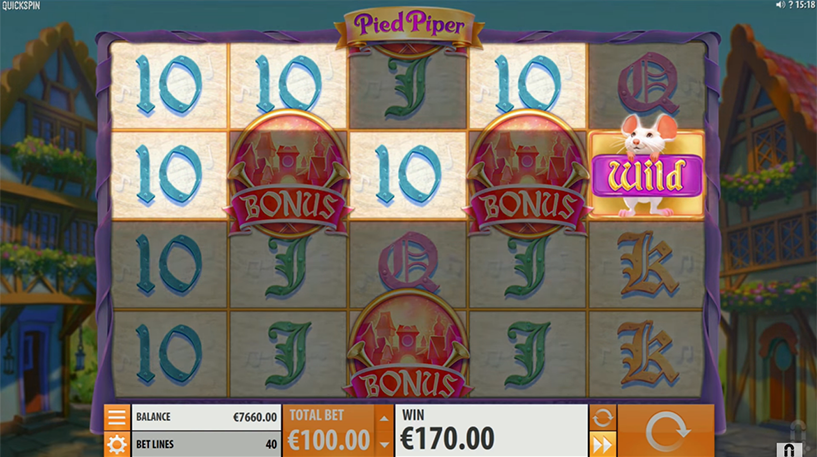
Several uniquely Canadian variables were built into the simulation model that global protocols often miss. Interac transaction timeouts were recreated against actual evening banking network loads, piperspin casino, while location checks to provincial regulatory databases were added to test compliance checks that must complete inside legally mandated windows. Mobile traffic was weighted at 68 per cent, reflecting the smartphone usage of Canadian users aged 25 to 44. Random latency spikes were introduced on upstream payment connections to monitor how smoothly the platform degrades when third-party systems malfunction. The final dataset held over 2.4 million separate transaction logs, offering a thorough foundation for all performance conclusions that followed.