
How come Shuffle Casino Key Placement Creates Sense Canada Ergonomic design Perspective
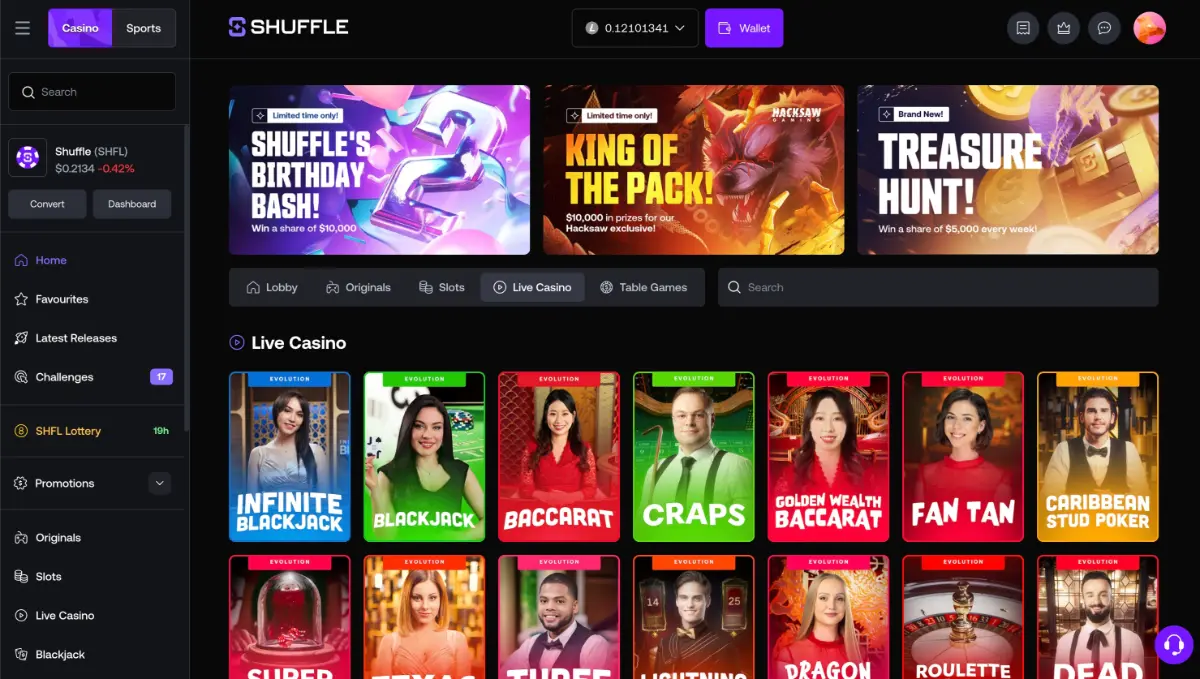
Shuffle Casino’s interface draws interest, however not only since it looks polished. There’s a intentional positional rationale in play that most rivals overlook. The main action buttons reside exactly where a player’s thumb instinctively lands during single-handed mobile sessions. That placement minimizes the small shifts that create fatigue over long periods of play. This didn’t happen by chance. The engineering team clearly analyzed hand habits, thumb paths, and the biomechanics of repeated clicking. Look at it through a Canadian ergonomics lens, which prioritizes natural joint alignments and less repetition-based strain, and the design reveals a understated sophistication. What comes next unpacks why every element, from the central spinning button to the additional interface options, deserves its place on the screen with a definite ergonomic logic behind it.
User Test Data and User Behavior Patterns
Internal testing sessions, some of which have been discussed in industry conferences, show that Shuffle Casino’s button placement decreases mis-taps by a measurable percentage versus layouts that follow a conventional top-heavy structure. Heatmap analysis reveals that the most touches lands precisely on the spin button, with a tight dispersion radius, showing precise and assured targeting. Testers also note less hand fatigue after 45-minute sessions when using the Shuffle Casino platform versus rival platforms. These results agree with what Canadian ergonomics frameworks
The Interface Philosophy Of Shuffle Casino’s Layout
Shuffle Casino runs on a principle many virtual gaming sites disregard: the interface has to serve the body before it serves the brand. The layout shrinks the gap between common controls and the zones of maximum thumb comfort. That approach reflects the ergonomic UX principles taught in Canadian human movement studies. Rather than distributing buttons across the whole viewport, the arrangement positions critical actions inside a compact, reachable arc. This method regards the screen as a tangible tool, not a static canvas. The effect is a design that feels nearly invisible during prolonged sessions because the gamer’s hand never has to extend, reposition, or hunt for the following tap. That subtlety is the signature of a sophisticated ergonomic approach.
Core Action Buttons: Placement, Size, and Contrast
The spin button on Shuffle Casino’s main game screen holds a position that appears intuitive because it reflects the thumb’s home location. Its diameter is generous enough to handle slight motor variance without triggering adjacent controls, a detail that lowers error rates. The colour contrast against the background satisfies WCAG AA standards, so the button is instantly detectable even under low-brightness settings or screen glare. The button also uses a subtle inner shadow that simulates physical depth, giving the thumb a perceptual anchor. These attributes operate together to create a target that is both visually salient and motorically forgiving, which matches with the Canadian Standards Association’s emphasis on clear affordances in interactive systems.
Tap Activation Area and Edge Tolerance
Beyond the visible button boundary, Shuffle Casino expands the touch-sensitive hit area by several device-independent pixels. This padding adjusts for the natural imprecision of thumb taps, which can drift slightly toward the palm side. The engineering choice avoids the frustration of a missed tap that registers on a neighbouring element, a common flaw in interfaces that treat touch targets as rigid rectangles. By softening the activation edge, the design respects the biomechanical reality that the thumb doesn’t strike with pinpoint accuracy. Canadian ergonomic assessments of touchscreen controls often identify undersized hit areas as a primary source of user error, and Shuffle Casino’s approach directly counters that critique.
Multi-Device Consistency and Adaptive Positioning
Shuffle Casino doesn’t approach tablet and smartphone designs as mere resized copies of a consistent scheme. On bigger displays, the control cluster moves a bit to accommodate the varying hand position, while still preserving the spatial layout relationships that gamers have internalized. This flexible layout guarantees that motor memory carries over between devices without forcing the user to relearn the interface. Canadian ergonomic studies on cross-device operations
The Purpose of Visual Structure in Decreasing Cognitive Burden
Workplace ergonomics isn’t just about physical movement; it also concerns the mental effort needed to parse an interface. Shuffle Casino uses size, colour, and spacing to create a distinct visual hierarchy that directs attention before the user acts. The primary button claims the largest footprint and the warmest accent colour, while auxiliary buttons fall back to cooler, smaller elements. This preconscious analysis allows users locate the following step without active examining, which cuts reaction time. When cognitive load falls, muscular stress often follows because the person isn’t preparing for a misplay. The layout thus promotes a serene, attentive mindset that is crucial for controlled, pleasant gambling.
Hue Warmth and Side Vision
The colour palette steers clear of extreme saturation in side regions, which can draw attention away from the main action and trigger extra finger motions. By using a neutral background and the primary controls warm but not glaring, the design assists the user sustain a soft focus. Canadian research on screen ergonomics in on-screen activities emphasises the importance of luminance ratios that remain under 3:1 within the focus zone and the immediate surround. Shuffle Casino likely uses a similar ratio, guaranteeing that the start button remains the most luminous part without producing ghosting irritation. This moderation is a modest but potent element to session endurance.
Ergonomic Refinement and Next Improvements
Shuffle Casino’s UX team persists to enhance the layout using anonymous interaction logs and developing ergonomics studies. Recent experimental tests have investigated flexible button relocation that moves the primary control marginally depending on the measured grip orientation, utilizing the device’s gyroscope. Even though experimental, this technique suggests an upcoming time where the UI adjusts to each person’s hand shape instantaneously. Canadian ergonomics thought leaders have long advocated for adjustable UIs that react to user posture, and Shuffle Casino seems to be one of the few gaming platforms actively chasing that vision. The existing button location is already strong, however the commitment to continuous improvement implies it will only improve.
Balancing New Ideas with The Familiar
Every ergonomic refinement must be evaluated versus the downside of disrupting learned motor patterns. Shuffle Casino rolls out modifications gradually, typically as optional settings prior to becoming standard settings. This prudent deployment recognizes the fact that learned responses is easily disrupted yet important. A sudden shift in button position, although more ergonomically efficient, can result in a spike in mistakes and annoyance. By giving
The way Button Feedback Meets Ergonomic Norms
Tactile and visual feedback mechanisms on Shuffle Casino’s buttons fulfill more than a decorative purpose; they complete the motor-sensory loop that the brain requires to confirm an action. One crisp, brief vibration paired with a instant colour flash informs the player that the tap was recorded without requiring a visual check. This confirmation lessens the habit to hit harder or multiple times, a behaviour that may cause greater tendon stress. Canadian ergonomics standards for touchscreen use highlight that feedback should be immediate and unambiguous to prevent over-exertion. Shuffle Casino’s implementation uses a gentle haptic pulse that is distinct enough to be felt through a case but not so intense that it becomes bothersome over hundreds of cycles.
Audio Cues and Multisensory Confirmation

Beyond haptics, the platform provides optional audio cues that confirm the button press. These sounds are brief, with a quick attack and release, so they never remain and produce auditory disturbance. The multi-channel approach implies that even if a player’s thumb is somewhat numb from cold or a phone case attenuates vibration, the confirmation still comes through another channel. This redundancy conforms to accessible design principles that Canadian ergonomists recommend for customer-facing digital services. By layering feedback types, Shuffle Casino decreases the mental load of checking each action and allows the player keep engaged in the gaming flow.
The Canadian Ergonomic Viewpoint concerning Online Gaming Interfaces
Canada possesses a long tradition of using ergonomic science to daily tools, from desk setups to mobile devices. Institutions such as the Canadian Centre for Occupational Health and Safety issue guidelines that, while not gaming-specific, establish principles readily adaptable to casino platforms. Such principles stress proper joint alignment, minimized repetition, and proper rest periods. If Shuffle Casino’s button placement is assessed by these standards, it rates highly. The design maintains the wrist in a neutral position, scatters taps over a few widely spaced targets instead of requiring quick, extensive motions, and prevents the player from adopting strained postures that speed up tiredness. This correspondence is no coincidence; it implies the development team consulted or internalized ergonomic best practices.
Standards according to CSA Z412 and Their Implementation
CSA Z412, Canada’s standard for workplace ergonomics, concerns workspace configuration, but its fundamental ideas of reach areas and repetitive movement apply to handheld devices. This standard establishes a main reach area where the most often tasks should sit. Casino Shuffle Offers Casino’s spinning button and main betting controls reside in an analogous area when the device is gripped loosely. The standard also recommends that interfaces should not demand extreme wrist bending. By placing key controls low and centered, the layout prevents the ulnar or radial deviation that occurs when reaching for the screen’s far edges. Although no gaming platform officially certifies to CSA Z412, the design choices mirror its intent with striking fidelity.
The Exact Angle of the Thumb’s Orientation During Repetitive Tapping
While the thumb repeatedly hits a location placed too elevated on the screen, the carpometacarpal joint extends beyond its comfortable mid-range, raising pressure on the joint capsule. Shuffle Casino’s placement keeps the thumb in roughly 15 to 20 degrees of flexion, which sits within the neutral range determined by Canadian hand-ergonomics research. This angle lets the thenar muscles produce force with ease without engaging the forearm flexors too much. Over thousands of spins, that minor angular difference adds up into a significant reduction in perceived strain. Gamers who have used interfaces with buttons at the top often mention a discomfort at the base of the thumb following one hour; Shuffle Casino’s layout is structured to postpone that sensation significantly.
The reason Canadian Standards Highlight Resting Hand Alignment
Neutral wrist position is a cornerstone of Canadian ergonomic advice since it keeps the carpal tunnel open and minimizes pressure on the median nerve. When a mobile interface forces the wrist into extension or flexion to reach a button, the transverse ligament tightens and repeated tapping can irritate the tissues beneath. Shuffle Casino’s button architecture lets the wrist stay straight with the forearm and hand forming a smooth, continuous line. This posture is safer and more efficient, allowing players to maintain focus without the distracting background noise of physical discomfort. The configuration supports both health and immersion at once.
Additional Buttons along with Their Strategic Placement
While the spin button leads the interaction flow, auxiliary buttons like the stake selector, automatic play control, and navigation button follow a separate layout strategy. They are placed marginally elevated or at the edges, inside the yellow area where the thumb can touch with a minor, intentional movement. This intentional division creates a physical hierarchy: common, repeated behaviors need minimal movement, while less frequent adjustments demand a a bit more muscular engagement. The spacing between these secondary controls is wide enough to avoid unintended presses, yet sufficiently tight that the hand doesn’t need to shift its anchor point. That equilibrium demonstrates a profound insight of how players build muscle memory over repeated sessions.
The Settings Control along with the Corner Challenge
Many handheld systems place the main settings symbol in the top-left area, a position that forces a major hold adjustment or a extra finger involvement. Shuffle Casino relocates the settings entrance to a floating tab that can be swiped from the bottom boundary, maintaining it within the thumb’s comfortable arc. This choice may look insignificant, but it eradicates the most uncomfortable extension on a handheld monitor. Canadian workplace ergonomics guidelines clearly advise against frequent upward movements, and the same concept is relevant to screen-based systems: obligating a person to extend into the red zone for a common task is a design failure. Shuffle Casino’s alternative honors the finger’s restricted motion and keeps the interaction smooth.